 Vitalis Edge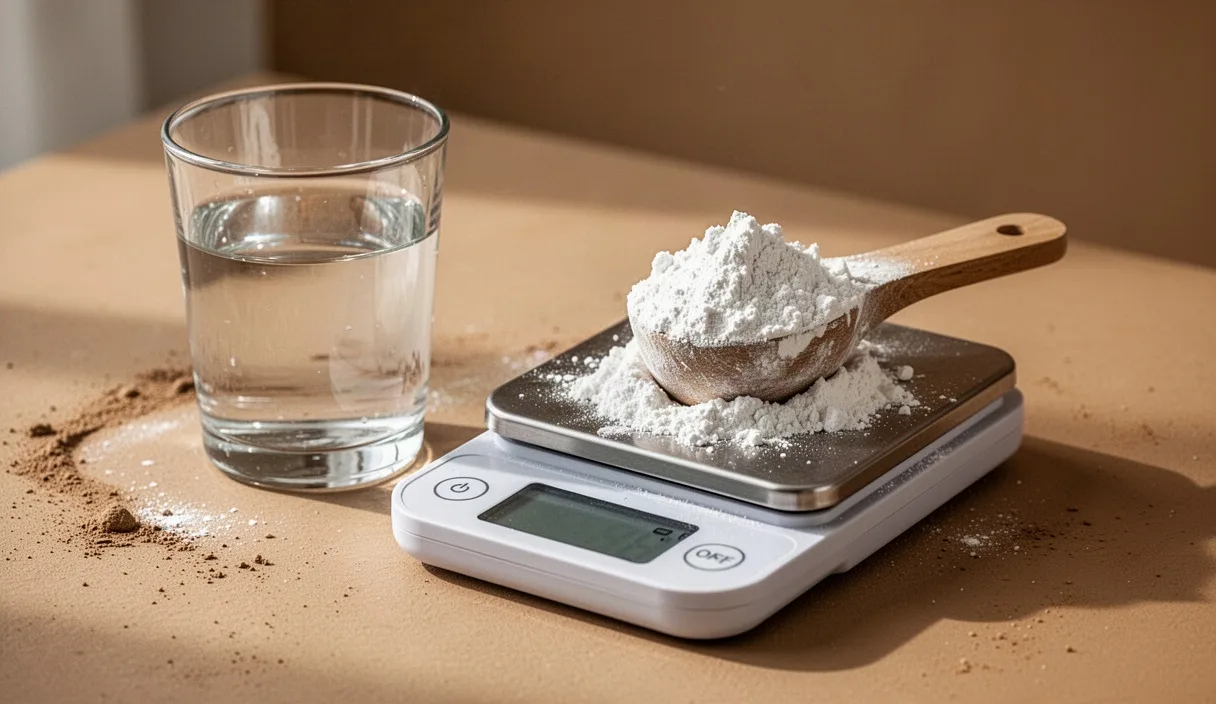

Creatine is one of the few supplements with a research history long enough to draw firm conclusions from: several hundred controlled trials, decades of use in athletic populations, and enough biochemical study to explain why it works rather than just observing that it does. That history also means the claims around it have drifted, some inflated, some outdated, some simply wrong. This article separates what the data supports from what marketing language has added on top.
The goal here is not to sell a protocol but to describe one accurately: what creatine does at the cellular level, what strength and power outcomes are documented, how dosing schedules compare, and where the safety evidence actually stands after 20-plus years of longitudinal observation. Where the research is incomplete or population-specific, that will be stated rather than smoothed over.
What Creatine Does in Muscle Cells
Creatine is a nitrogen-containing organic compound synthesized primarily in the liver and kidneys from three amino acids: arginine, glycine, and methionine. About 95% of the body's creatine pool is stored in skeletal muscle, with the remainder distributed in the brain, heart, and testes. Roughly two-thirds of muscle creatine is stored as phosphocreatine, the rest as free creatine.
Phosphocreatine serves as a rapid-reserve donor of phosphate groups, regenerating adenosine triphosphate (ATP) from adenosine diphosphate (ADP) during short bursts of high-intensity work. This reaction, catalyzed by creatine kinase, is the fastest ATP-regeneration pathway the body has, faster than glycolysis or oxidative phosphorylation, but limited in capacity. It sustains maximal effort for roughly 8 to 10 seconds before phosphocreatine stores are substantially depleted.
Supplementation raises total muscle creatine content by an average of 20% to 40% above baseline, though the response varies by individual. People with lower starting muscle creatine, often vegetarians and vegans who get no dietary creatine from meat or fish, tend to show larger relative increases. People who already have high baseline stores, sometimes called "non-responders" in the literature, may see smaller changes because their storage capacity is closer to saturation already.
Beyond the phosphocreatine shuttle, creatine appears to draw water into muscle cells (intracellular, not subcutaneous) and may support several secondary pathways, including buffering of hydrogen ions during glycolysis and modulation of gene expression related to satellite cell activity. These secondary mechanisms are studied less thoroughly than the core ATP-regeneration role and should be treated as plausible contributors rather than established mechanisms.
Documented Effects on Strength and Power
The most consistent finding across meta-analyses is an improvement in performance for activities lasting under about 30 seconds and repeated with short rest intervals, think sets of squats, sprint repeats, or jump sequences. A commonly cited pooled analysis of resistance-training studies found average strength gains of roughly 8% greater than placebo groups over training periods of 4 to 12 weeks, with one-repetition-maximum bench press and squat as the most frequently measured outcomes.
Power output metrics, such as vertical jump height and cycling sprint wattage, show smaller but still measurable improvements, typically in the range of 5% to 15% depending on the training protocol and population studied. The effect is generally more pronounced in trained individuals following a structured resistance program than in untrained subjects doing minimal exercise.
Endurance performance in continuous, steady-state activities (distance running, for example) does not show a reliable benefit and in some studies shows a very small negative effect, likely tied to added water weight increasing the load being carried. This distinction matters: creatine is a repeated high-intensity effort supplement, not a general endurance aid.
- Resistance training (multiple sets, short rest): consistent, moderate strength gains documented across dozens of trials
- Sprint intervals with rest periods: improved repeat-sprint performance in several studies of team-sport athletes
- Single maximal effort (one sprint, one jump): effects are smaller and less consistent
- Continuous endurance events: no reliable benefit, occasional slight negative effect from added mass
Loading Phase vs Steady Daily Dosing
Two dosing approaches dominate the research literature. A loading phase typically uses 20 grams per day, split into four 5-gram doses, for 5 to 7 days, followed by a maintenance dose of 3 to 5 grams daily. The alternative is a flat maintenance dose of 3 to 5 grams daily from the start, with no loading period.
The loading protocol saturates muscle creatine stores faster, generally within about a week, compared to 3 to 4 weeks with the flat-dose approach. Total creatine saturation at the end of both protocols tends to converge; the difference is mainly how quickly that plateau is reached, not the final plateau itself.
| Protocol | Daily dose | Time to saturation | Notes |
|---|---|---|---|
| Loading phase | 20g (split into 4x5g) | ~5-7 days | Higher short-term GI load for some users |
| Flat daily dose | 3-5g | ~3-4 weeks | Simpler, fewer reported digestive complaints |
Some people report mild gastrointestinal discomfort, bloating, or loose stool during the loading phase, likely from the higher single-dose volume. Splitting the loading dose across four smaller servings rather than two large ones tends to reduce this. There is no strong evidence that loading produces a superior long-term outcome once maintenance dosing is underway for several weeks; it simply front-loads the timeline for those who want faster saturation before a competition or specific training block.
Common Misconceptions About Water Retention
The claim that creatine causes "bloating" or subcutaneous water retention, the kind that changes how someone looks in the mirror, is not well supported. The water increase associated with creatine use is intracellular, meaning it is drawn into the muscle cell itself rather than sitting under the skin. This is mechanistically different from the water retention associated with high sodium intake or certain medications.
Scale weight can increase by roughly 1 to 2 kilograms (about 2 to 4 pounds) in the first one to two weeks of use, largely reflecting this intracellular water shift alongside modest increases in muscle glycogen storage capacity. This is a real, measurable change but it is not the same phenomenon as puffiness or a "soft" appearance, which people typically attribute to subcutaneous water or fat.
Confusion often stems from anecdotal reports rather than controlled measurement. Some individuals do perceive a fuller or smoother look, and there's no way to definitively rule out person-specific responses, but repeated body-composition studies using skinfold or DEXA methods have not found consistent evidence of increased subcutaneous water or fat mass attributable to creatine itself.
Safety Data From Long-Term Studies
Creatine monohydrate is among the most studied supplements for safety, with trials extending up to five years in some populations, including athletes and, in smaller numbers, older adults. The consistent finding across this body of work is that standard doses (3 to 5 grams daily maintenance) do not produce clinically meaningful changes in kidney function markers in people with healthy kidneys at baseline.
A frequently cited concern involves creatinine, a metabolic byproduct of creatine breakdown that is used as a marker in standard kidney function blood tests. Supplementation can raise measured serum creatinine slightly, which sometimes triggers a flag on routine bloodwork, but this reflects increased creatinine production, not impaired kidney filtration. Anyone on creatine who gets bloodwork done should mention the supplement to their doctor so the result is interpreted correctly rather than mistaken for reduced kidney function.
People with pre-existing kidney disease, or anyone taking medications that affect kidney function (certain NSAIDs, some blood pressure medications), should consult a physician before starting creatine, since the safety data in those specific populations is far more limited than in healthy adults. This is a case where a blanket "it's safe" statement would be inaccurate; the safety evidence is population-specific.
Reported side effects in the broader literature are generally mild and include occasional stomach discomfort, primarily during high-dose loading, and rare reports of muscle cramping, though controlled studies have not consistently linked creatine to cramping more than placebo.
Who May Not Need Supplementation
Not everyone stands to gain the same amount from adding creatine. People who already consume large amounts of red meat and fish, the main dietary sources of creatine, tend to have higher baseline muscle stores and may see a smaller relative increase from supplementation compared to someone eating little or no animal protein.
People whose training does not involve repeated short, high-intensity efforts, such as those doing primarily long-duration, steady-state cardio work, are less likely to see the strength or power benefits documented in the resistance-training literature. The supplement is mechanism-specific, and expecting it to improve a 10-kilometer run time is not supported by current evidence.
Individuals with diagnosed kidney disease, those pregnant or breastfeeding (due to a lack of controlled trial data in these groups, not evidence of harm), and anyone under 18 outside of a physician-supervised context fall into categories where the research base is thin enough that a healthcare provider's input should guide the decision, rather than general population data.
How to Choose a Product Label Correctly
Creatine monohydrate is the form with by far the largest volume of supporting research; other forms (creatine hydrochloride, ethyl ester, buffered variants) are marketed on claims of better absorption or fewer side effects, but independent trials have not consistently shown these forms to outperform monohydrate at equivalent doses.
A few label-reading habits help avoid overpaying or under-dosing:
- Check that the serving size delivers 3 to 5 grams of creatine monohydrate per dose, not a blend where creatine is diluted among other ingredients
- Look for third-party testing certification (such as NSF Certified for Sport or Informed Sport) if competing in a drug-tested sport, since contamination in unregulated supplement manufacturing has been documented in independent lab audits
- Be skeptical of "micronized" or "extra absorption" claims without cited data; micronization affects solubility, not necessarily how much creatine the muscle ultimately retains
- Avoid products bundling creatine with large stimulant doses if sensitivity to caffeine or other stimulants is a concern, since combination products can obscure how much of each ingredient is actually being consumed
Price per effective gram, not price per container, is the useful comparison metric. A tub priced lower per serving but requiring a larger scoop to hit the 3 to 5 gram target is not automatically the better value.
Common mistakes
The most frequent errors are dosing based on body weight without checking the label's actual creatine content per serving, assuming a loading phase is mandatory rather than optional, stopping supplementation after a few days because of a temporary weight increase misread as fat gain, and skipping a conversation with a doctor when starting creatine alongside kidney-affecting medications or pre-existing conditions.
Practical Next Steps
For a healthy adult doing resistance training with repeated sets, a reasonable starting point based on the evidence above is 3 to 5 grams of creatine monohydrate daily, taken consistently at any time of day, with or without a 5 to 7 day loading phase depending on how quickly saturation is desired. Mixing with water or a beverage is sufficient; there is no strong evidence that timing around workouts changes the outcome meaningfully.
Anyone with kidney concerns, on relevant medications, pregnant, breastfeeding, or under 18 should discuss supplementation with a physician before starting, given the thinner evidence base in those groups. For everyone else, tracking strength metrics (working weights, rep counts) over 4 to 8 weeks is a more useful way to judge individual response than relying on scale weight or appearance in the mirror.